
Llanddwyn Island has a magic all of its own.
One of the most photographed places in North Wales, yet so iconic that we all want our own keepsake of it.
One of the most photographed places in North Wales, yet so iconic that we all want our own keepsake of it.
The island sits on the south-west coast of Anglesey (Ynys Môn), looking out across Caernarfon Bay (Bae Caernarfon) towards the mountains of Snowdonia (Eryri). Access is only possible at low tide, as the sea cuts the island off for several hours each day, adding to the mystique of this remarkable place.
The approach starts at Newborough (Niwbwrch), in the main parking area at the edge of Newborough Forest (Coedwig Niwbwrch). Here, weathered trees stand at the forest’s edge, bent and shaped by years of wind and salt, quietly marking the meeting point between land and sea. The landscape opens out quickly. Newborough Beach (Traeth Llanddwyn) stretches into the distance, backed by the forest behind you and the open sweep of the bay ahead.
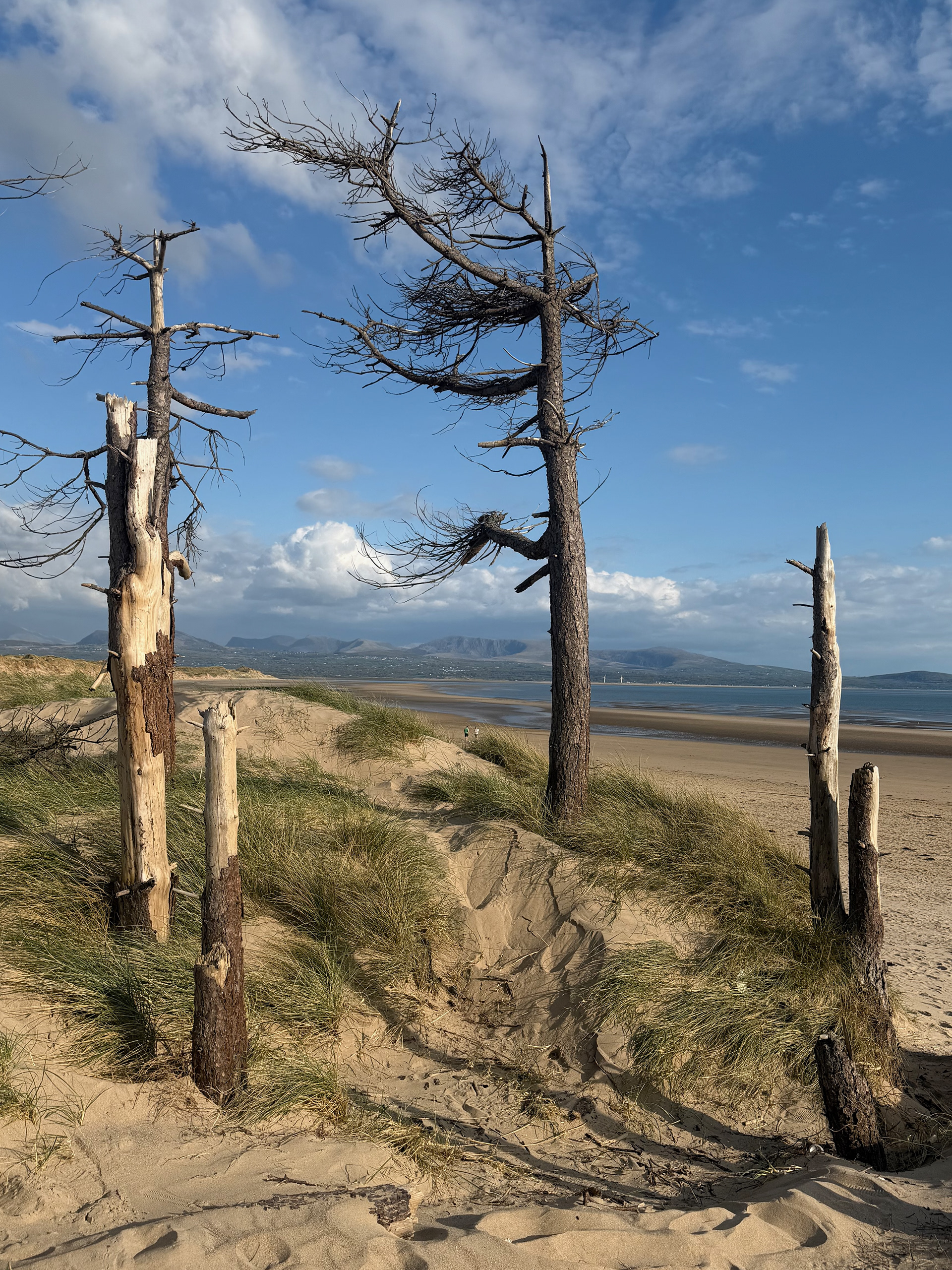
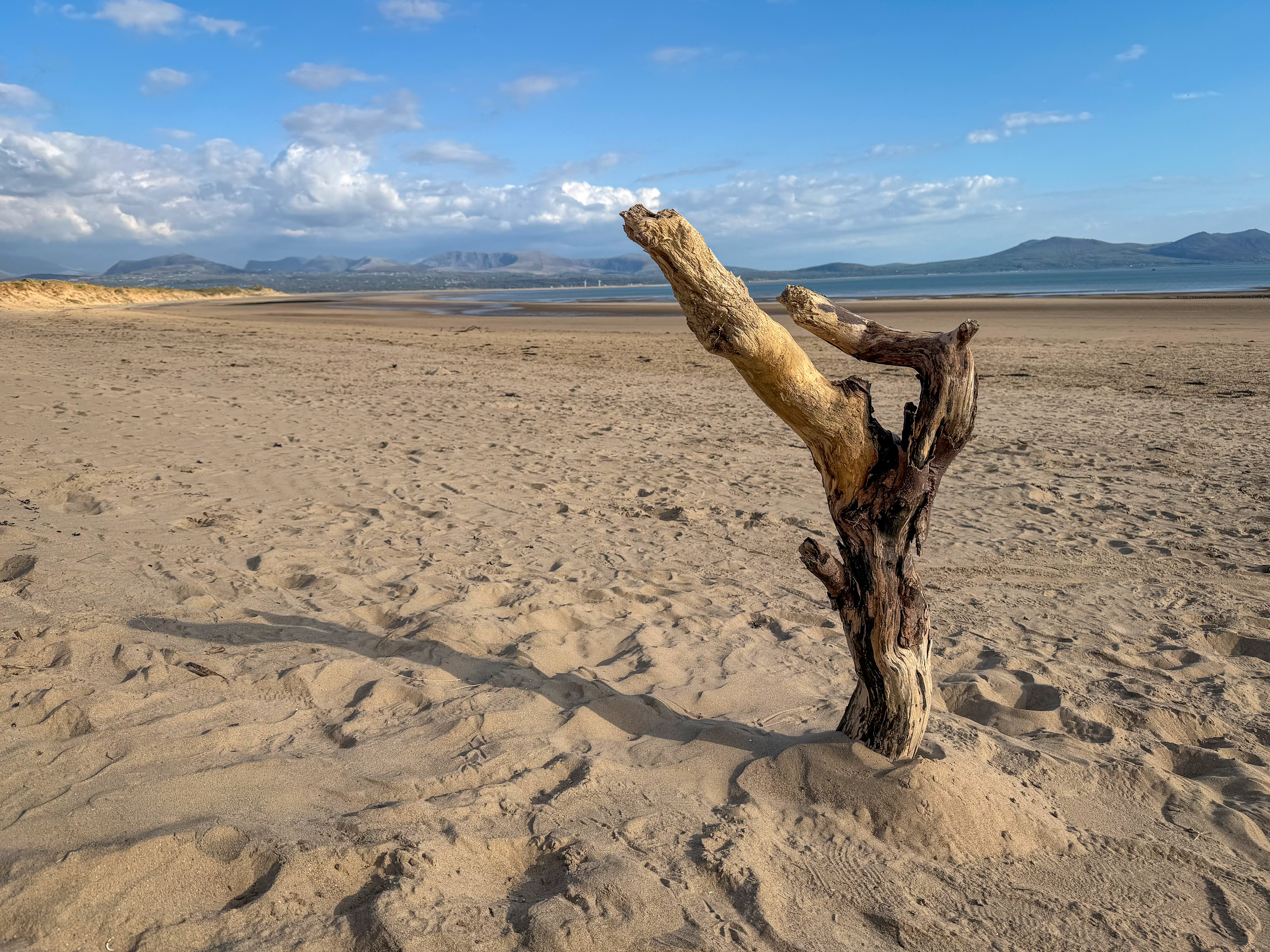
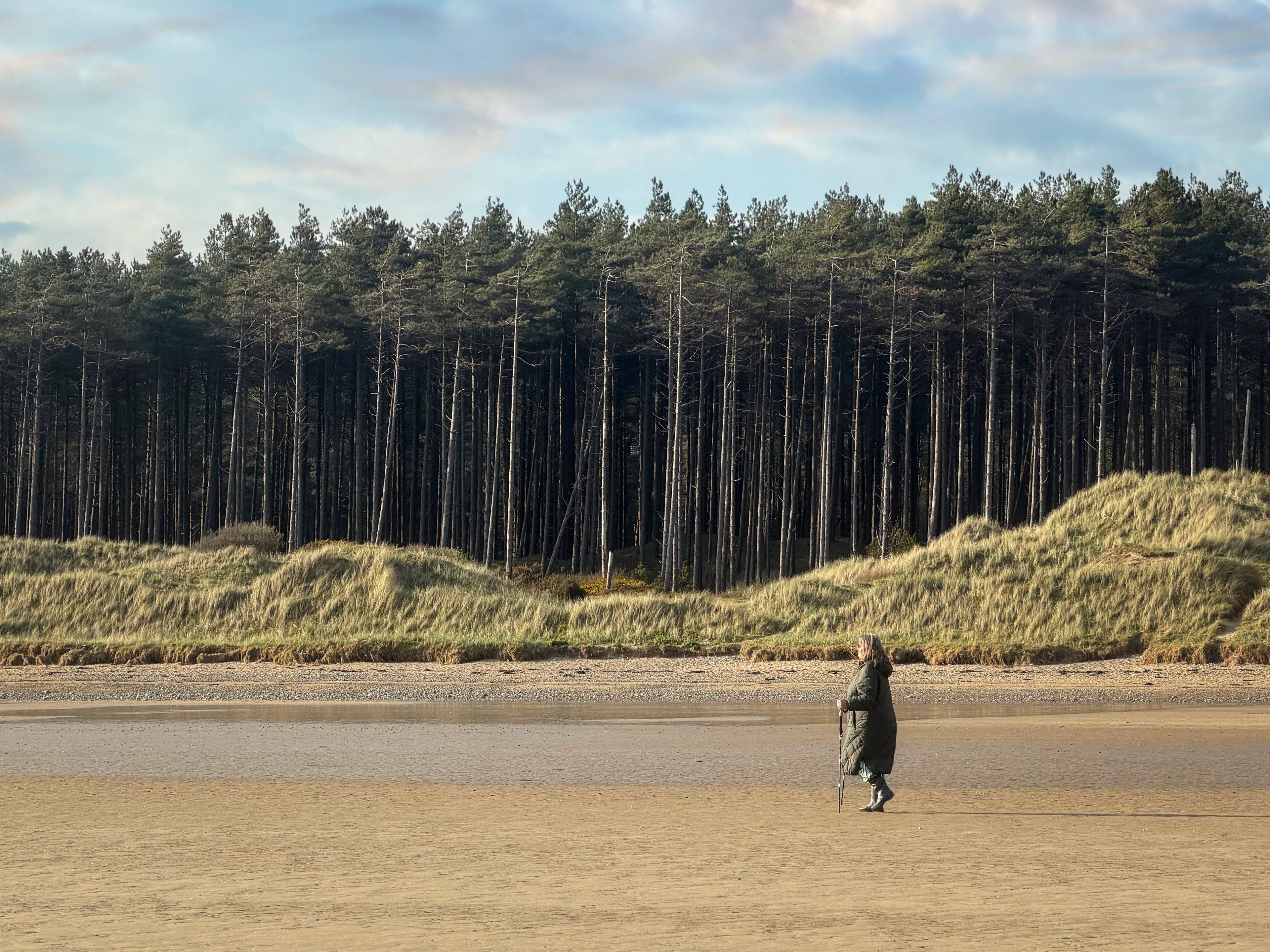
The Corsican pine trees of Newborough Forest were planted between 1947 and 1965 to provide timber and to stabilise the shifting sand dunes, turning a restless landscape shaped over thousands of years into the forest that we see today.
You follow the shoreline, the island always ahead of you, the sand firm underfoot, the tide breathing in and out beside you. Already, you sense that you are leaving the everyday world behind. The walk takes at least half an hour, though the vastness of the beach makes the island feel further away than it first appears. The island remains just beyond reach for a while, always ahead of you, quietly inviting you onward. Reaching it depends on the tide. At low tide, the crossing reveals itself, a simple stretch of sand linking mainland to island. Nothing dramatic. Nothing complicated. Just a reminder that timing matters here, and that nature still sets the rules.
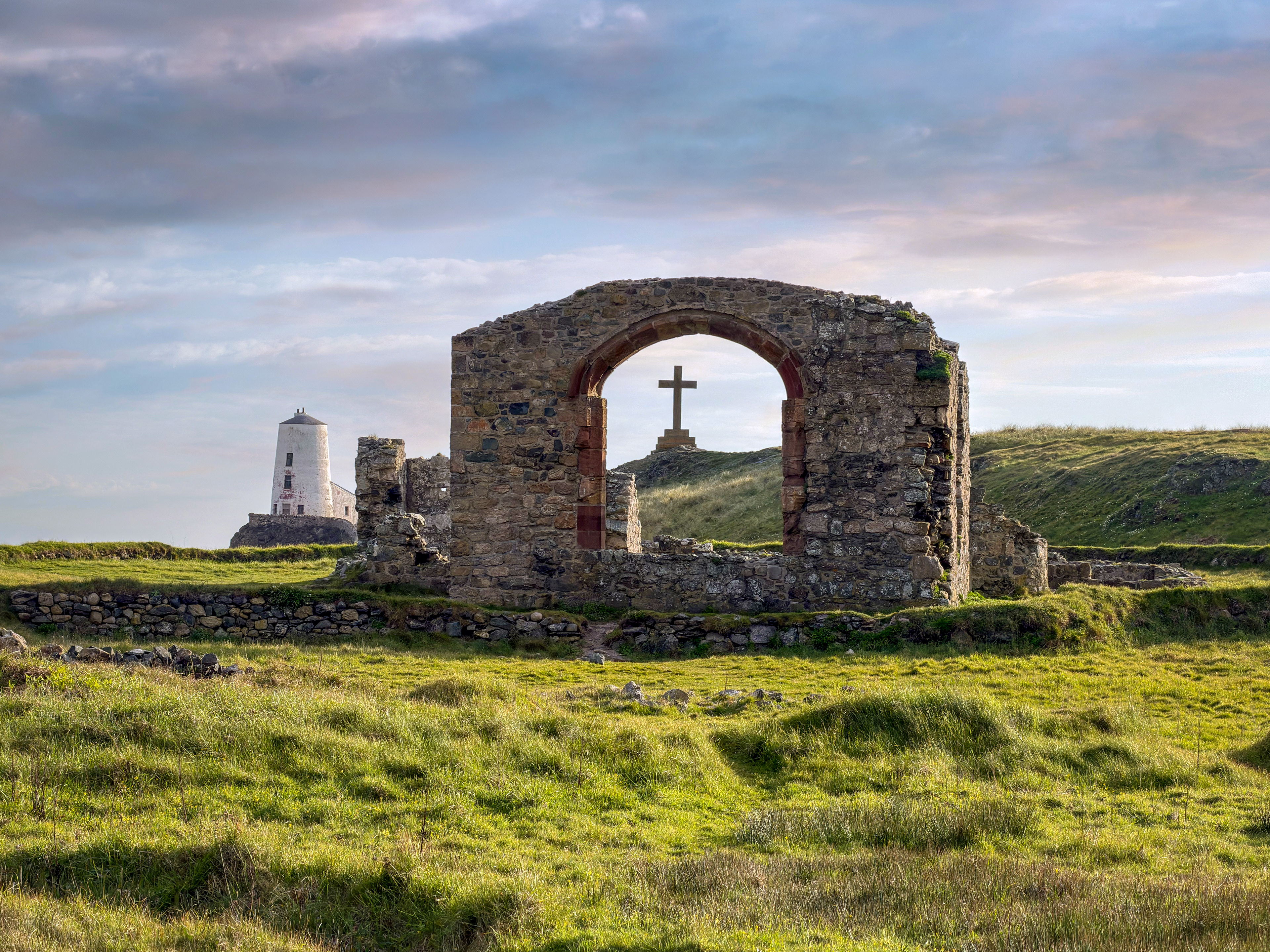
Long before it became a place for photographs and quiet evening walks, it was a place of faith and pilgrimage. The ruins of St Dwynwen’s Church (Eglwys Santes Dwynwen) still stand, shaped by centuries of weather and time. Nearby lies Dwynwen’s Well (Ffynnon Dwynwen), once believed to hold healing powers, a sacred place where people came seeking guidance in matters of the heart.
Dwynwen herself is remembered as the Welsh patron saint of lovers. Her story is one of heartbreak, devotion, and sacrifice. According to legend, she chose a life of solitude here in the early 5th century after being denied the chance to marry the man she loved. Over time, the island became a place where people came to pray for love, forgiveness, and hope. She is honoured each year on St Dwynwen’s Day, 25 January, often described as the Welsh equivalent of St Valentine’s Day.
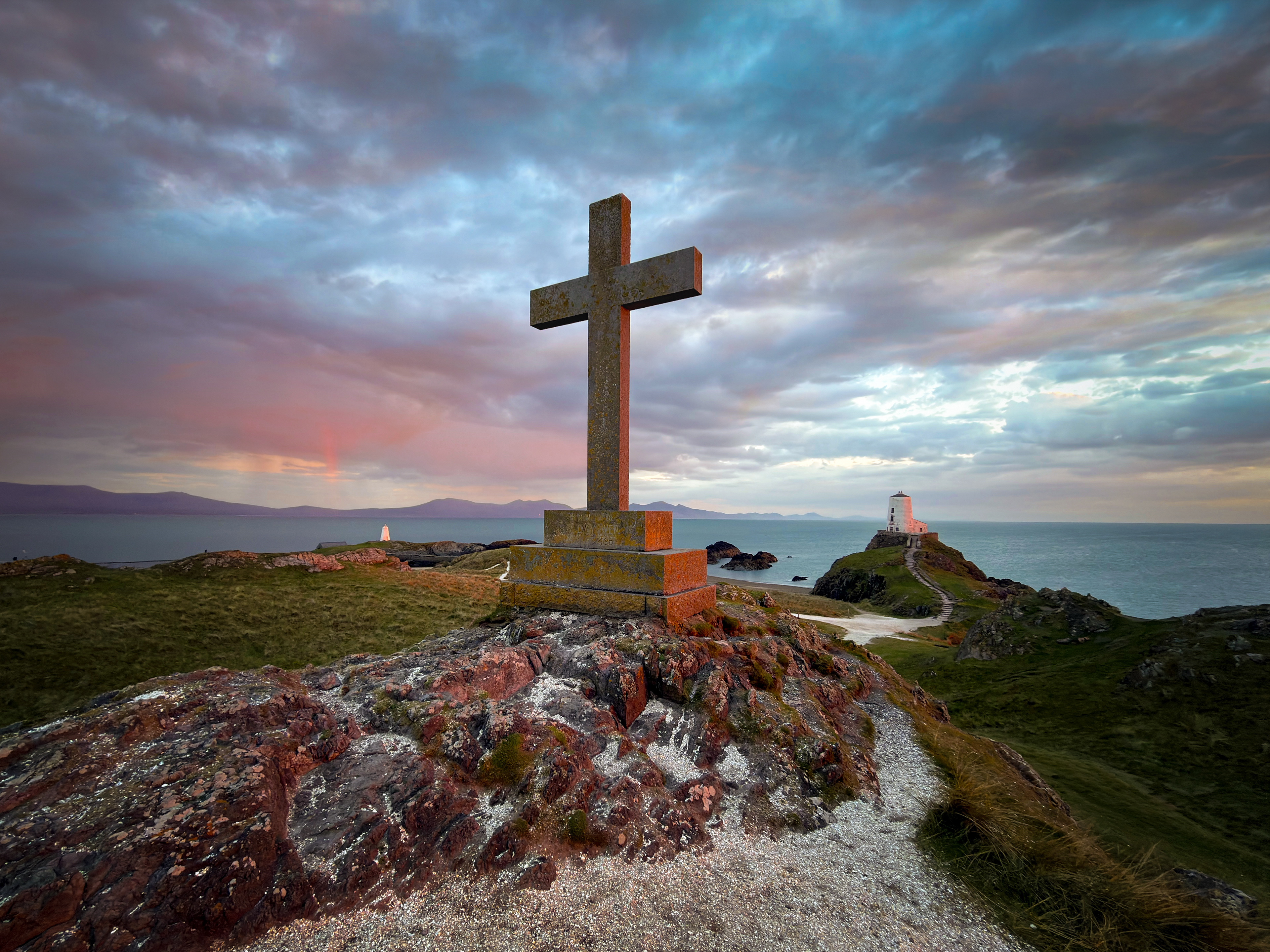
Close by, near the ruins of the church, stand two crosses overlooking the bay. One is a simple stone cross, modest and unadorned. The other is the larger Celtic Cross, erected in the early years of the twentieth century to commemorate St Dwynwen, believed to have died around the year 465. Set against the wide sweep of sea and sky, the two crosses have become a familiar landmark on the island, quietly marking its long connection with faith, remembrance, and devotion.
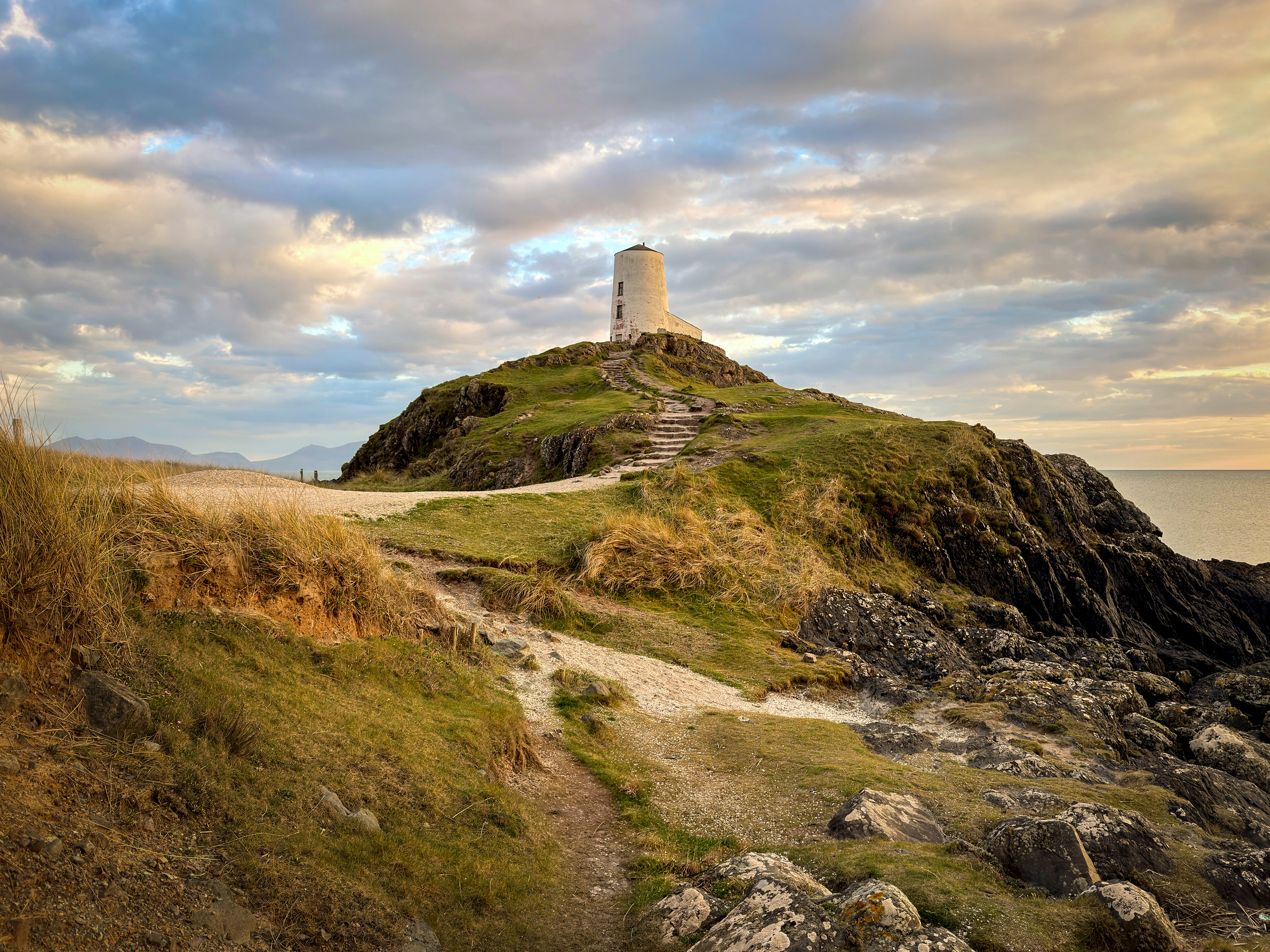
Tŵr Mawr (Great Tower), the tall lighthouse

Tŵr Bach (Little Tower)
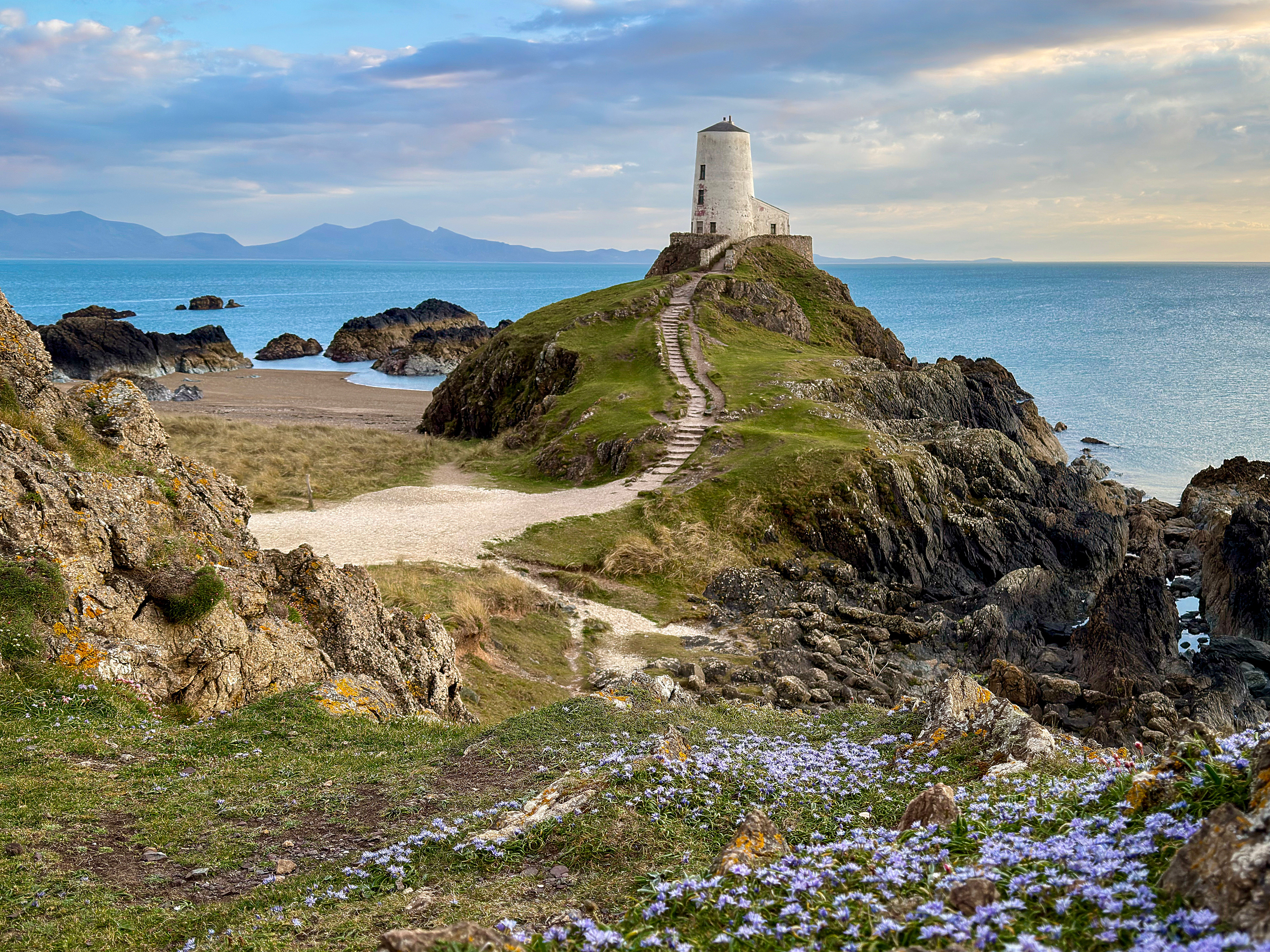
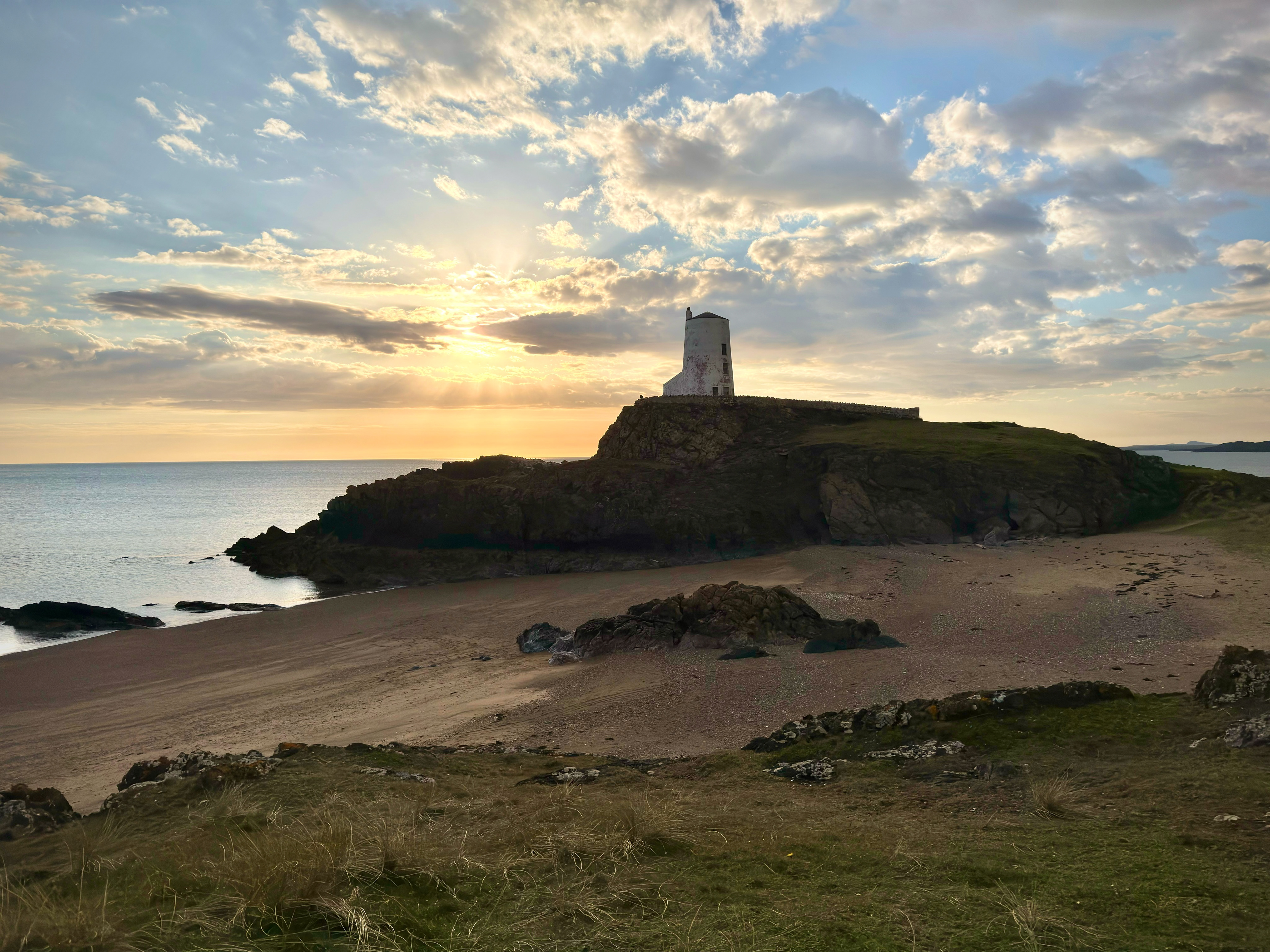
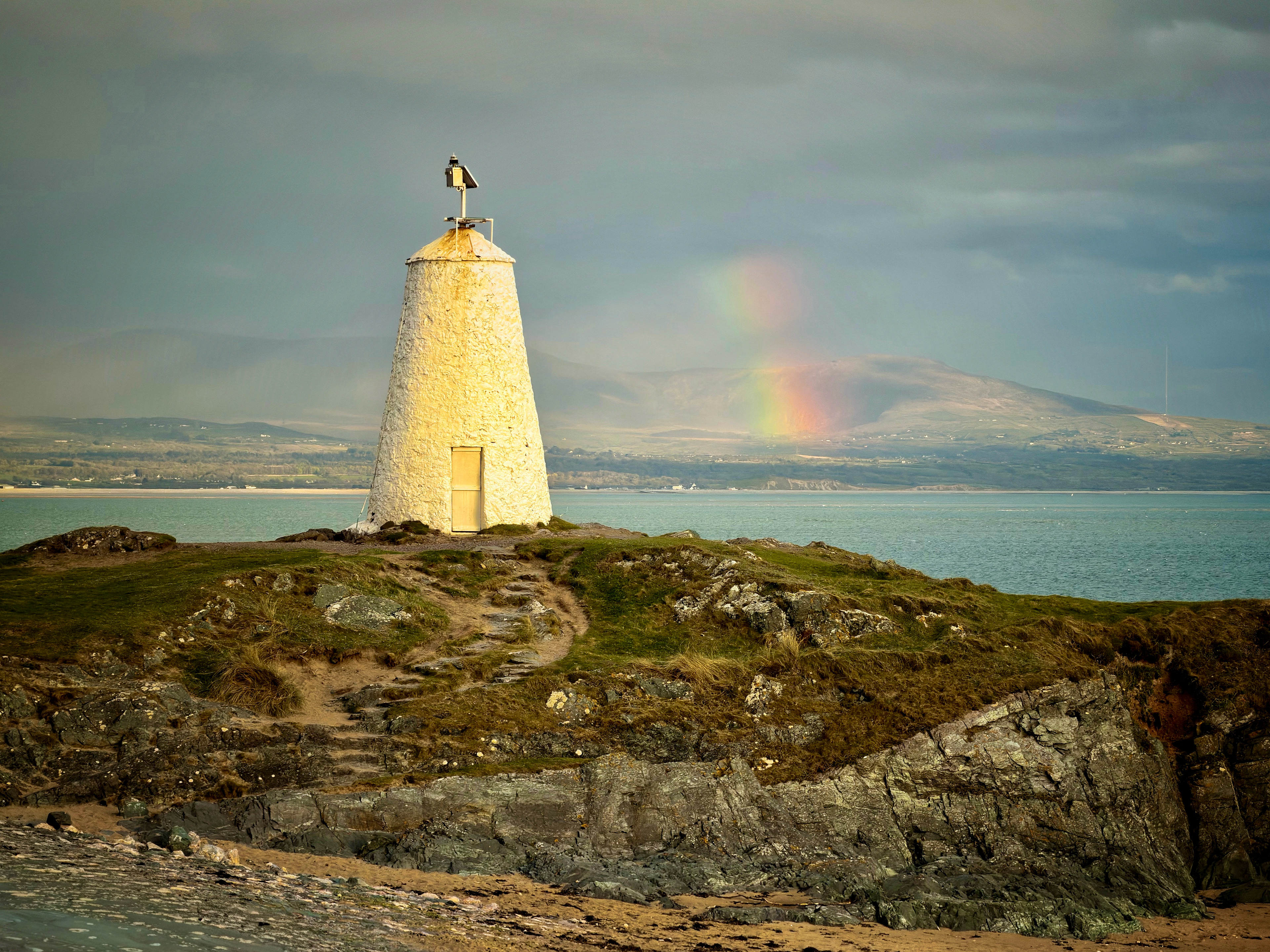
Out on the headland stand the two beacons that have guided sailors for generations. Tŵr Mawr (Great Tower), the tall lighthouse built in 1845, rises like a sentinel against the sky, its design said to echo the windmills once common on Anglesey. Nearby stands Tŵr Bach (Little Tower), smaller, older, and more understated, yet just as important in helping ships find their way safely through the Menai Strait. Together they mark the edge of land and sea, symbols of guidance, endurance, and safe passage.
It is an iconic view, one that feels almost staged, as though it belongs on a film set rather than at the far edge of an island. The towers stand against wide skies and shifting light, framed by sea and sand, a scene that seems ready-made for the camera. Perhaps that is why this place has found its way onto screen more than once, its timeless landscape lending itself naturally to storytelling.
Yet despite the photographs, the paintings, and the productions that have passed through, the scene never feels artificial. It remains quietly authentic, shaped by history and tide, a place where the past and present seem to share the same horizon.
The atmosphere can build gently here.
The sun throwing a final warm glow across the land, while from the direction of the mountains a rain shower slowly approaches. North Wales weather in an instant. For a moment, there may be the faintest hint of a rainbow in the distance. And for a while, sunset and rain share the same sky.
I last visited the island in 2018, and moments like these remind me that I should return more often.
Because this place leaves you with something more than a photograph.
It leaves you with a memory.
The sun throwing a final warm glow across the land, while from the direction of the mountains a rain shower slowly approaches. North Wales weather in an instant. For a moment, there may be the faintest hint of a rainbow in the distance. And for a while, sunset and rain share the same sky.
I last visited the island in 2018, and moments like these remind me that I should return more often.
Because this place leaves you with something more than a photograph.
It leaves you with a memory.